
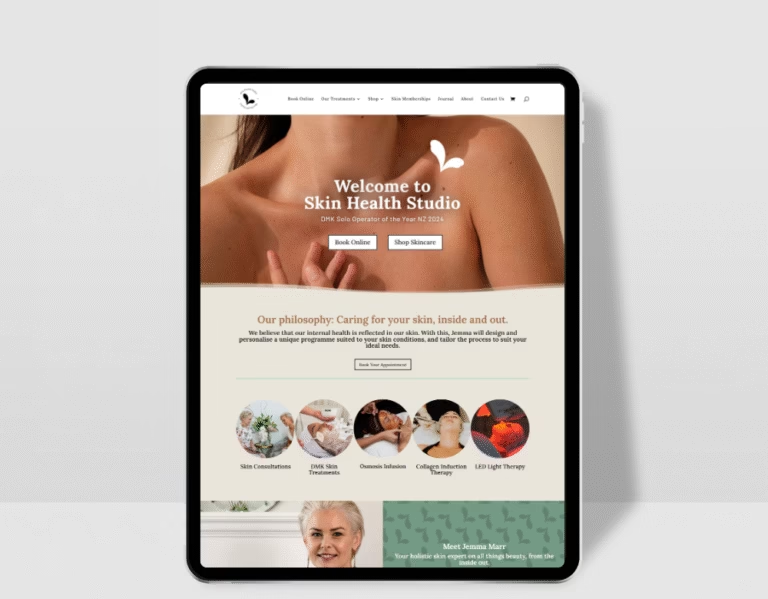
Your homepage has more influence than most people realise.
It’s often the first proper look someone gets at your business after finding you through Google, Instagram, word of mouth or a referral. They arrive with a little curiosity, a few questions and a quick feeling check happening in the background.
Does this business feel right? Do they offer what I need? Can I trust them? Is this easy enough to understand?
A good homepage helps answer those questions without making people work too hard.
For beauty clinics, skin therapists, wellness businesses and service-based small businesses, the homepage is more than a welcome mat. It can guide people into the right service, build trust before they enquire, make booking easier and quietly support better-fit clients.
When it’s done well, the homepage makes the rest of the website feel easier too.
Lovely when one page stops making everyone work so hard.
The short version
Your homepage should help people understand what you do, who you help, why it matters and where to go next.
It does not need to explain every detail of the business. That’s what your service pages, treatment pages, about page and enquiry page are for.
The homepage is there to create clarity. It gives people enough confidence to keep moving through the website, whether that means learning more about a treatment, viewing your services, checking your work, booking a consultation or submitting an enquiry.
Think of the homepage as a guide
The strongest homepages usually feel calm, clear and intentional.
They don’t throw every piece of information at the reader straight away. They guide people through the business in a way that feels natural.
That matters because most people are not reading your homepage like a book. They’re scanning, noticing, deciding and comparing. They’re trying to work out whether they’re in the right place.
For a skin clinic, that might mean someone is deciding whether they need a consultation, an advanced treatment or better homecare guidance. For a wellness business, they may be checking whether your approach feels safe and aligned. For a service business, they may be trying to understand what you actually do and whether the process feels professional.
Your homepage can make those decisions easier.
The first section needs to settle people quickly
The top of your homepage has one clear job. It needs to help people understand the business quickly enough to keep reading.
That doesn’t mean it has to be blunt or boring. It just needs to be specific.
A beauty clinic homepage should make it clear what kind of clinic you are, where you’re based and what kind of treatments or client experience you offer. A website or brand design homepage should make it clear who the work is for and what kind of support is available.
Vague opening lines can sound pretty, but they often leave people floating. A clear first section gives them something to hold onto.
This is where your homepage can start doing proper work. It can help the right person think, “Yes, this feels like the place I was looking for.”
Your main services should feel easy to choose from
A homepage should make your main pathways obvious.
If you run a clinic, that might mean showing your core treatment categories instead of overwhelming people with every individual service. If you offer website and brand design, it might mean showing the main packages first, then letting add-ons sit in their proper place.
The order matters. The visual weight matters. The wording matters.
When everything is presented as equally important, people have to do more work to understand what matters most. A clearer homepage creates hierarchy, so the reader can see what you’re known for, what the main options are and which path makes the most sense for them.
For Maglev, that means Website in a Week leads the way, while branding, ecommerce and VIP Design Days sit in supporting roles. For a clinic, it might mean consultations and core treatments lead the way, while smaller add-ons or seasonal offers support the main client journey.
This kind of hierarchy matters in clinic websites too. In projects like 23 Therapies and Skin Dynamics Winton, the website needed to help visitors understand the main service pathways quickly.
The copy should sound clear, not over-polished
Homepage copy often gets a bit too polished for its own good.
It says nice things, but not enough useful things. There might be wording about helping people feel confident, creating beautiful experiences or bringing a vision to life, but the reader still has to work out what the business actually does.
Useful homepage copy is more grounded.
It explains what you offer in language your clients understand. It carries your tone without hiding the point. It gives enough context for someone to feel oriented, without trying to explain every detail on the first page.
For beauty and wellness businesses, this is especially important because clients often arrive with a mix of practical and emotional questions. They want to know what treatment might suit them, whether the space feels professional, whether they’ll be looked after properly and what the next step looks like.
Clear copy gives them confidence.
Trust should appear before people need convincing
Trust is not something to save for the bottom of the page.
By the time someone reaches your testimonials, case studies or client results, they should already be getting a sense that your business knows what it’s doing.
That trust can come through in small ways throughout the homepage. A strong opening statement. Specific service descriptions. Professional photos. Clear process notes. Client testimonials. Recognised product brands. Qualifications. Results. Case studies. A calm explanation of how you work.
For a skin clinic, trust might come from explaining your consultation process, showing the products you work with, sharing client education or making it clear that treatment plans are considered rather than rushed.
For a service business, trust might come from showing your process, your work, your testimonials and the kind of client you’re best suited to help. If enquiry quality is part of the issue, How to attract better-fit enquiries through your website is a good next read.
The next step should feel natural
A good homepage does not force everyone into the same action.
Some people are ready to book. Some need to read more. Some want to understand your process. Some want to see examples of your work. Some are not quite ready yet, but they’re getting closer.
Your calls to action should reflect that.
A clinic might use “Book now” for simple appointments, “Book a consultation” for skin journeys, and “View treatments” for people still exploring. A service business might use “View Website in a Week”, “Explore Brand Design” and “Submit a project enquiry”.
The homepage should give people a clear next step without making the page feel pushy.
That’s often where good design and good strategy meet. The button is not just decoration. It tells people what to do next.
Mobile is where the homepage proves itself
A homepage can look beautiful on desktop and still feel frustrating on a phone.
That matters because plenty of people will first visit your site from mobile. They might be clicking through from Instagram, checking your business between clients, searching after work or comparing options while they’re already close to making a decision.
On mobile, the homepage needs to flow cleanly.
The first section should be easy to understand. Buttons should be simple to tap. Text should feel readable. Service cards should stack neatly. Images should support the content rather than slow everything down.
If the mobile homepage feels cramped, it can make the whole business feel harder to engage with, even when the actual service is excellent.
A homepage does not need to be packed to feel complete
Some of the strongest homepages are quite simple.
They know what they’re there to do. They introduce the business, guide people towards the main services, show enough proof to build trust, explain the next step and leave space for the important pieces to breathe.
That space matters.
Whitespace is not empty in a bad way. It gives the reader room to take things in. It lets the right messages stand out. It stops the homepage from feeling like every section is competing for attention.
Often, improving a homepage is less about adding more and more about choosing what deserves to stay.
What I usually look for on a homepage
When I review a homepage, I’m looking at how quickly someone can understand the business and how naturally they can move towards the next step.
I want to know whether the first section is clear, whether the main services are easy to identify, whether the copy feels specific, whether the proof is strong enough, and whether the calls to action match the decisions people are making.
I’m also looking at whether the homepage feels like the business now.
That part matters. A homepage that suited the business two years ago may not be the right fit anymore. Your services may be clearer now. Your pricing may have changed. Your client experience may be more refined. Your visuals may have matured. Your website should be allowed to grow with the business.
A clearer homepage makes the whole website feel easier
When the homepage is clear, the rest of the website has a stronger foundation.
People understand the business faster. They can choose the right service page. They know whether they’re in the right place. They can decide whether to book, enquire, keep reading or come back when they’re ready.
That clarity can reduce repetitive questions, improve enquiry quality and make the website feel more useful day to day.
If your homepage feels crowded, vague or a little harder to explain than you’d like, it may not need more content. It may need a clearer role.
Website in a Week is designed to help service businesses create a clearer, more strategic website without dragging the process out for months.
You can view the Website Design page or submit a project enquiry if you’re ready for a website that feels more sorted.

