More enquiries sounds like the dream, until the enquiries are not quite right.
You know the ones. People asking for a service you don’t offer anymore. People who haven’t read the page. People who want a quick quote with no context. People who love your work, but are nowhere near the investment. People who need something completely different from what you actually do.
They’re not bad people. They’re just not the right enquiries.
For beauty clinics, skin therapists, wellness businesses and service-based small businesses, this can quietly take up a lot of time. You end up replying to the same questions, explaining the same boundaries, sending the same links, or gently redirecting people who were never really a fit.
Your website can help with that.
The short version
Better-fit enquiries usually come from clearer website messaging, stronger service pages, visible pricing, useful proof and an enquiry pathway that helps people understand whether they’re ready to take the next step.
Your website can do more than encourage people to get in touch. It can help the right people feel confident, answer common questions before they reach your inbox, and gently filter out enquiries that were never going to be a good fit.
That’s not about being cold or exclusive. It’s about making the process easier for everyone.
Better enquiries usually start with clearer information
People can only enquire based on what your website gives them.
If your services are vague, your process is unclear, your prices are hidden, or your next step is too general, you’ll likely get more confused enquiries. People fill in the gaps themselves, and sometimes they fill them in completely differently from how you intended.
This is where a website can make your life easier. It can explain the important details before someone reaches your inbox.
For a clinic, that might mean explaining whether a client should book a skin consultation first, which treatments are best suited to new clients, or whether online skincare purchases are available. For a service business, it might mean explaining your packages, timelines, investment and how the enquiry process works.
The clearer the website, the less your inbox has to do the heavy lifting.
Your service pages need to be specific enough to guide people
A service page should do more than list what you offer. It should help people work out whether that offer is right for them.
That means your page needs to explain who the service is for, what problem it helps solve, what is included, what the process looks like, and what someone should do next.
If you run a skin clinic, your treatment pages should help people understand the difference between options. A client should not have to guess whether they need LED, a peel, a facial, skin needling or a consultation. Your website can guide them towards the right starting point.
If you run a service business, your offer pages should make the level of support clear. A simple design day, a brand package and a full website project are very different decisions. The website needs to show that difference clearly, without making people dig for it.
Vague copy attracts vague enquiries
This one is a little annoying because vague copy often sounds quite nice.
It talks about confidence, growth, transformation, support and beautiful results. All good things, but if the copy never gets specific, people still don’t know what they’re actually enquiring about.
Specific copy is more useful.
It tells people what you do, how you work, who it suits, what the experience feels like, and what kind of outcome they can expect.
For a beauty or wellness business, this might mean explaining whether your approach is relaxation-focused, results-focused, consultation-led, holistic, advanced, low-maintenance or education-heavy.
For a website or brand design business, it might mean making the offer structure clear enough that people can self-select before they ever fill out the form. If the homepage is part of the issue, How to make your homepage work harder for your business is a useful next read.
Clear copy does not need to sound boring. It just needs to stop hiding the useful information behind pretty wording.
Pricing helps people make better decisions
I know pricing can feel awkward to put on a website.
But pricing is also one of the easiest ways to improve enquiry quality.
When people can see the investment before they enquire, they can decide whether it’s realistic for them right now. That saves time on both sides and makes the enquiry feel more grounded from the start.
This is especially useful for package-based services. If you offer a Website in a Week package, a brand package, a VIP Design Day or a treatment programme, a visible starting price helps people understand the level of investment before they begin the conversation.
For clinics, pricing can also reduce back-and-forth questions. It does not mean every single situation needs to be fully priced online, especially where consultations or custom treatment plans are involved. But if there are clear starting points, packages or standard appointments, giving people a guide can make the booking decision easier.
People who are ready will appreciate the clarity. People who aren’t ready yet can quietly keep browsing, which is perfectly fine too.
Your website should show who the offer is actually for
Better-fit enquiries often come from people recognising themselves in the page.
That recognition does not happen by accident. It comes from the examples you use, the language you choose, the problems you name and the details you include.
If you want more beauty clinic clients, talk about treatment menus, booking systems, consultations, skincare retail, client trust and local visibility. If you want more wellness businesses, talk about creating calm, clear client journeys and helping people understand the offer before they enquire.
If you want more established service businesses, speak to the things they’re probably dealing with now. Outdated websites. Offers that have changed. Enquiries that are not quite aligned. A business that has grown, but a digital presence that still feels a few steps behind.
When the right person sees their real day-to-day experience reflected on your website, they’re more likely to feel understood.
The enquiry form can qualify without feeling cold
Your enquiry form does not need to feel like an interrogation.
But it should gather enough information to help you respond properly.
A good form might ask what service someone is interested in, what their business does, what success would look like, whether they’re comfortable with the investment, and when they’d like to start.
Those questions are not there to make the process harder. They’re there to make the next step more useful.
For a small business owner, especially someone enquiring between clients, after school pickup, or at 9pm with a cold cup of tea beside them, the form should still feel easy to complete. Clear questions, simple options and no unnecessary fluff.
Filter gently. Don’t make people feel like they’re applying for a mortgage.
Your calls to action should match where people are in the decision
Not every person visiting your website is ready to enquire straight away.
Some people need to read more about the service. Some need to understand the process. Some want proof. Some are comparing options. Some are ready, but need the button to be obvious enough that they don’t lose momentum.
This is why your calls to action matter.
A strong service page might have a primary enquiry button, a secondary link to FAQs, and a few natural links to case studies or related content. A clinic website might have “Book now” for simple appointments, “Book a consultation” for more involved treatment pathways, and “View treatments” for people still exploring.
The next step should feel like the natural next step, not a random button dropped at the bottom of the page.
Proof helps people decide if they trust you
Better-fit enquiries usually come from people who already feel some level of trust before they get in touch.
That trust can come from testimonials, case studies, client results, clinic photos, project examples, product brands, qualifications, process details or thoughtful educational content.
For service businesses, proof is especially powerful when it shows the kind of work you want more of.
If you want beauty, skin and wellness clients, your website should show relevant projects, testimonials and examples from that world where possible. If you want strategic website projects, your proof should point towards that, rather than only showing older or unrelated design work.
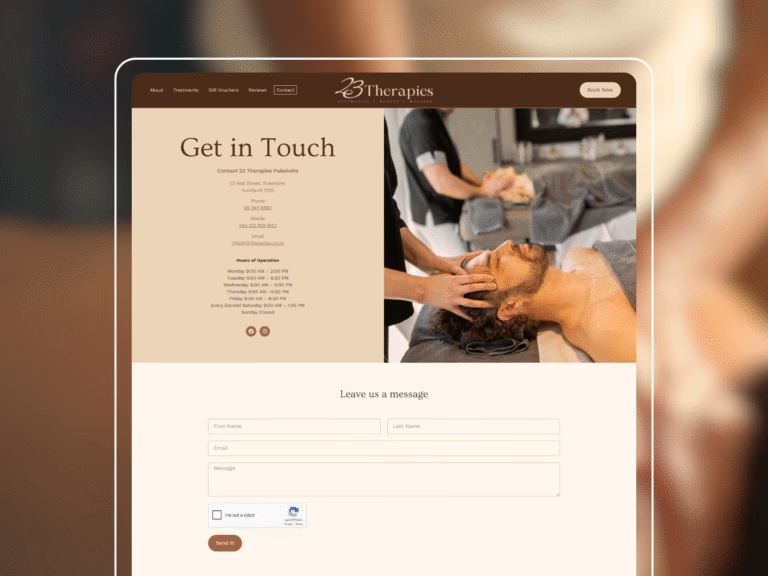
That’s why I prioritise relevant proof from projects like Skin Health Studio, 23 Therapies and Satini Cosmetic Clinic, because they show the kind of businesses Maglev is best suited to support.
People use proof to work out whether they’re in the right place. Make that easier for them.
Better-fit enquiries are a website strategy issue
If your website is bringing in enquiries that do not quite match the work you want, it doesn’t automatically mean the website is doing a bad job.
It may simply need clearer positioning.
That could mean tightening your service pages, improving the homepage pathway, adding pricing, making your process clearer, updating the enquiry form, or using more relevant proof throughout the site.
The goal is not to scare people away. The goal is to help the right people feel more confident, while giving wrong-fit enquiries enough information to self-select before they take up your time.
That is a good thing for everyone.
A clearer website can make your inbox feel lighter
When your website explains things properly, enquiries tend to feel easier.
People arrive with more context. They understand the service better. They have a sense of the investment. They know what the next step looks like. They have already had a chance to decide whether the offer feels right.
That means your replies can be more useful, your calls can be more focused, and your energy goes into better conversations.
If your website is currently bringing in too many almost-right enquiries, it may be time to make the pathway clearer.
Website in a Week is designed for service businesses that want a clearer, more strategic website without a drawn-out project timeline.
You can view the Website Design page or submit a project enquiry if you’re ready to make your website work a little harder for the right people.

