There’s a moment where you look at your website and think, “Something needs to change.”
The harder part is working out how much needs to change.
Maybe the site still works, but it feels a little tired. Maybe the design is fine, but the services are out of date. Maybe the whole thing feels clunky and you’re avoiding sending people there. Or maybe you’ve changed so much as a business that the website feels like it belongs to a completely different era.
This is where people often get stuck. Do you need a website refresh, or do you need a brand new website?
Good question. Annoyingly, the answer is “it depends”, but I promise we can make that more useful.
The short version
A website refresh is usually enough when the foundations are still strong, but the content, layout, images or calls to action need updating. A new website makes more sense when the structure, strategy, design or user experience no longer supports the business.
The right choice depends on what is causing the disconnect. If the website still has good bones, refreshing it can be a smart and cost-effective next step. If the site is hard to use, hard to update, poorly structured or no longer reflects the business at all, a new website will usually give you a stronger result.
The goal is not to do the biggest project. The goal is to choose the work that will actually move the business forward.
Start with what still works
Before assuming the whole website needs to go, it’s worth looking at what is still doing its job.
Maybe the overall structure is clear. Maybe the pages make sense. Maybe the website is easy to update and still feels technically sound. Maybe your homepage just needs stronger copy, updated photos and clearer pathways into your main services.
In that case, a refresh may be enough.
A website refresh can include things like rewriting key sections, updating service descriptions, changing the layout of important pages, replacing old images, improving calls to action, adjusting the navigation, tightening SEO titles and making the mobile experience feel smoother.
It’s a tidy-up with strategy behind it. Not a casual “move a few things around and hope for the best” situation.
When a refresh is the smarter choice
A refresh works best when the main issue is that the website has become a little outdated, not fundamentally wrong.
You may need a refresh if your business has made small but meaningful changes. Your services have been refined, your process is clearer, your images are older than you’d like, or your homepage no longer leads with the right offer.
For a beauty or wellness business, that might mean your treatment menu needs tidying, your booking buttons need to be more obvious, or your skin consultation pathway needs clearer wording.
For a service business, it might mean one offer now needs to lead the website, while older or smaller services move into a supporting role.
If your website is nearly right but feels like it needs a bit more clarity, a refresh can be a lovely next step.
When a new website makes more sense
A new website becomes the better option when the foundations are no longer supporting the business.
That might mean the page structure is confusing, the design feels very dated, the mobile experience is awkward, the website is difficult to update, or the whole thing was built for a version of the business that no longer exists.
If you’re constantly working around the website, that’s a sign.
You might be sending people to Instagram instead, explaining your services manually, apologising for outdated information, or avoiding the website because it doesn’t feel like you anymore. At that point, refreshing a few sections may not solve the deeper issue.
Sometimes the cleanest path is to rebuild with a better structure from the start.
The content can be the real issue
Sometimes the design gets blamed when the content is the actual problem.
The website might look fine, but the words are too vague. The service pages don’t explain enough. The homepage doesn’t guide people anywhere useful. The calls to action are unclear. The About page is still telling the old version of the story.
When that happens, a visual refresh alone won’t fix much.
The website needs clearer messaging, not just a nicer layout. That’s especially true if your enquiries are not quite right, or if people keep asking questions your website should already be answering. The article on how to attract better-fit enquiries through your website goes deeper into that side of things.
Look at how the website feels on mobile
Mobile is often where the truth shows up.
A website can look acceptable on desktop and still feel clunky on a phone. Buttons might be hard to tap, sections might feel too long, service cards might stack awkwardly, or important information may be buried too far down the page.
For clinics, this matters because people often book from their phone. They might be clicking through from Instagram, checking availability between appointments, or looking up treatment information after a recommendation from a friend.
If the mobile experience feels like a squeezed version of the desktop site, it may need more than a light tidy.
Your website should match how the business sells now
Businesses change.
You might have started with lots of smaller services, then moved into packages. You might have added ecommerce, changed your pricing, shifted towards consultation-led work, or become more focused on a particular audience.
Your website needs to support the way the business sells now.
For Maglev, that means making Website in a Week the main pathway, with Brand Design and add-ons sitting clearly around it. For a clinic, it might mean making skin consultations easier to find, grouping treatments more clearly, or showing skincare retail as part of the client journey.
If the website is still structured around your old sales process, it may be time for a bigger rethink.
Case studies can help you see the difference
Sometimes it’s easier to understand what you need by looking at examples.
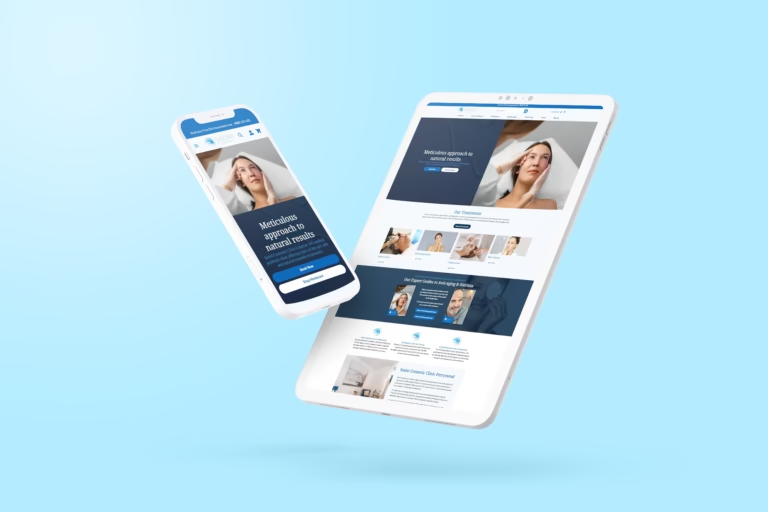
A project like 23 Therapies shows how a website can support a clearer wellness experience and help people understand the business more quickly. Skin Dynamics Winton is a useful example of a skin clinic website where the online experience needed to support both services and ecommerce.
Different businesses need different levels of change. That’s why the first step is always working out what is actually holding the website back.
How I’d decide
If your website still feels aligned, loads quickly, works well on mobile, has a logical structure and only needs clearer content or updated visuals, I’d look at a refresh first.
If the site feels hard to use, hard to explain, technically clunky or out of sync with the business, I’d look at a new website.
If the brand itself feels like the thing holding everything back, it may be worth reading Do you need branding before a new website? before making the call.
No drama. Just the right order of work.
Ready to work out what your website needs?
You don’t need to arrive knowing whether you need a refresh or a full rebuild.
That’s part of what we can work through together.
If your website feels nearly right, a smaller tidy-up may be enough. If it feels like it belongs to an older version of your business, Website in a Week may be a better fit.
You can view the Website Design page, or submit a project enquiry if you’re ready to talk through what your website needs next.

